How to Measure Backlink Quality Before You Build
Last updated: October 11, 2026
Quick Answer: in most cases, I would score a prospect out of 10 and only build it if it gets at least 7/10 on relevance, page visibility, and placement quality; for How to Measure Backlink Quality Before You Build, that usually means one strong topic match, real search or audience visibility, and no obvious spam risk.
A good backlink sends real people, not just a prettier number in a report. For How to Measure Backlink Quality Before You Build, I would judge relevance, visibility, and risk before I ever ask for the link.
What actually makes a backlink worth building?
A backlink is worth building when the linking page can plausibly pass qualified traffic, fit the topic, and avoid putting your site near spammy neighborhoods. Miss one of those three, and the link may still look fine in Ahrefs, Semrush, or Moz, but it is usually a weak investment.
Start with the page, not the domain. A link from a 2,000-word resource page on a narrow topic can beat a link from a giant site where your mention is buried in a category archive no one opens. Should the page rank for queries that match your offer, that matters more than a large domain-wide metric.
Here is the filter I would use before outreach:
| Situation | Best Path | Why Other Options Fail |
|---|---|---|
| The page ranks for a relevant keyword | Prioritize it | A strong domain with no topical fit usually sends little qualified value |
| The page has little traffic but tight topical alignment | Consider it | Many “authority” links are too broad to matter |
| The page is on a site with obvious spam patterns | Skip it | Domain metrics can hide bad neighborhoods |
| The page is editorially placed in body copy | Prefer it | Footer, sidebar, and sitewide links often dilute value |
Use topical relevance first, then traffic signals, then trust signals. Domain Authority, Domain Rating, and similar scores are handy shortcuts, but they are not the decision. They are a rough proxy, not a verdict.
Quick check: would the linking page still make sense if you explained its mention of your site in one sentence?
How do you measure backlink quality before outreach?
Check the page, the site, and the placement. If any one of those fails hard, I would not spend time on the outreach sequence.
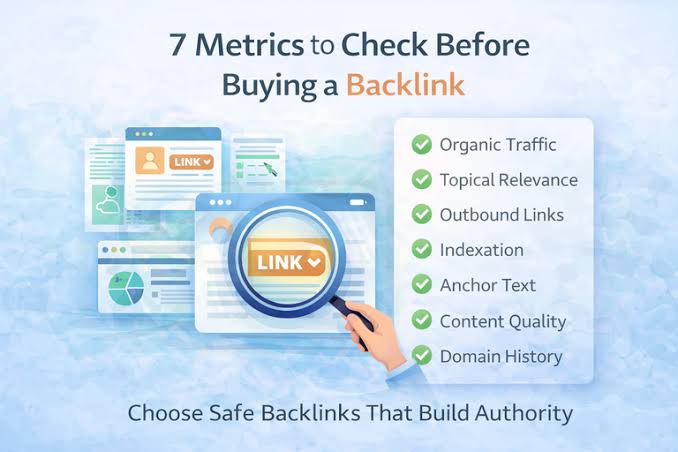
A practical pre-build review usually takes 10 to 15 minutes per prospect once you have a rhythm. I would look at five things in this order:
- Topical match: Read the page title, H1, and first 200 words. If your target page would feel out of place there, stop.
- Index status: Confirm the page is indexable in Google. Noindex pages are usually dead ends for SEO value.
- Traffic visibility: Use Ahrefs, Semrush, or Similarweb as directional tools. I care more about whether the page appears to get real visits than whether a dashboard score is shiny.
- Outbound link pattern: Every other sentence should not be a commercial link; that page is already contaminated.
- Placement likelihood: Ask where the link would live. Body copy beats author bio, sidebar, and footer in almost every case.
A link from a relevant page with modest traffic can outperform a flashy domain with poor placement. That is the part generic advice often misses. People chase a homepage metric and ignore the page where the link will actually sit; the math stops working fast.
For authority checks, I would use Google Search Central’s guidance on link schemes and the FTC’s disclosure rules when sponsorship or payment is involved. Those two sources matter because a “good” link that violates policy can become a problem later:
- Google Search Central: https://developers.google.com/search/docs/essentials/spam-policies
- FTC Endorsement Guides: https://www.ftc.gov/business-guidance/resources/ftcs-endorsement-guides
Quick check: if the link landed on the page you are reviewing right now, would that page still be worth the effort?
Which metrics matter, and which ones fool you?
Traffic estimates, topical relevance, and link placement matter more than any single authority score, and a high metric can still be a bad buy if the page is irrelevant or stuffed with ads.
I would treat the common metrics like this:
- Domain Rating / Domain Authority: useful for quick filtering, not decision-making. If you are unsure how to read them in your own niche, consult an SEO professional or specialist and compare them with Google Search Central’s spam guidance and Ahrefs’ and Moz’s metric explanations.
- Estimated organic traffic: helpful if the estimate is tied to a page, not just the root domain.
- Referring domains: good only if they come from varied, relevant sites.
- Spam score / toxic score: a warning light, not a final judgment.
- URL Rating or page-level strength: worth checking when the link will sit on a specific article or resource page.
The trap is obvious: numbers are easy to compare, so they feel precise. They are not precise enough to replace judgment. A site can have a healthy-looking score because it has accumulated links over years, while the exact page you want has no search visibility and no audience.
Need a benchmark? Ask three questions before greenlighting a prospect:
- Does the page rank for any query that would plausibly attract your audience?
- Does the page read like something a person would visit without being paid to click?
- Does the site look like it has a real editorial standard, or does it publish anything with a logo on it?
If the answer to all three is yes, I would move forward. If only the metric is strong and the rest is weak, I would pass.
Quick check: are you choosing this prospect because the number is high, or because the page itself looks worth reading?
If you’re building links for SEO, what should you prioritize?
For rankings, I would put relevance, editorial placement, and link diversity ahead of raw authority. But if the goal is referral traffic or brand visibility, the order changes and traffic matters more than score.
That split is where most advice goes wrong. A link builder chasing rankings often overvalues authority and undervalues page fit. Someone chasing traffic may do the opposite. The right filter depends on the job.
For SEO-focused prospecting, I would use this path:
- List 20 to 50 target pages that already rank or attract links in your niche.
- Check whether your topic belongs on those pages without forcing the fit.
- Open the page in the browser and inspect the visible content, not just the metric panel.
- Use Ahrefs, Semrush, or Moz to see if the page gets any search traffic or links of its own.
- Check whether the page is indexable and whether it has a clean outbound link profile.
- Score the prospect as “high,” “medium,” or “pass” based on fit, not on a single numeric threshold.
For a referral-traffic campaign, I would flip the emphasis. A smaller site with a loyal audience and a clear content match can outperform a larger site whose readers would never click your offer. If the end reader matters more than the search engine, then a smaller but sharper placement is often the better buy.
One honest limitation: no pre-build process can guarantee ranking gains. Search engines weigh the link in context with dozens of other signals, and a link that looks perfect on paper can still do very little.
Quick check: are you trying to move rankings, earn traffic, or build credibility in a niche community? The answer changes the filter.
When should you walk away from a backlink prospect?
Walk away when the page is thin, the site feels built for links instead of readers, or the placement requires a payment or exchange that creates risk without enough upside.
I would reject a prospect fast if I see any of these:
- Exact-match anchor manipulation everywhere
- Obvious spun or AI-noise content with no editor’s hand
- Pages overloaded with affiliate blocks and ad clutter
- Outbound links to unrelated casinos, pills, loans, or “write for us” farms
- A sitewide footer or sidebar placement when you wanted a contextual editorial mention
A page can also be bad even if it looks clean. If the topic drift is wide enough that your link would feel inserted, I would not force it. Readers notice that, and editors usually do too.
The other reason to walk away is opportunity cost. A mediocre prospect can consume the same outreach time as a strong one. If you have 100 prospects and only 10 deserve attention, spending time on the wrong 90 is the real cost.
My rule is simple: if I would not be comfortable sending a colleague to that page, I would not build the link there. That rule is stricter than many teams use, but it saves cleanup later.
Quick check: does the prospect feel like a place your audience would trust, or just a place that happens to accept links?
What should your quality check look like before you pitch?
Your quality check should end with a short, repeatable scorecard: topic fit, page visibility, placement quality, and risk. If any one of those lands in the red, I would not pitch until you have a better prospect.
Here is a compact workflow I would use for every candidate:
| Situation | Best Path | Why Other Options Fail |
|---|---|---|
| You need rankings | Favor contextual editorial links on relevant pages | Sitewide or unrelated links can look noisy and underperform |
| You need traffic | Favor pages with real readers and visible search demand | High authority without audience intent rarely clicks |
| You need brand credibility | Favor respected niche publications and expert roundups | Generic directories do little for trust |
| The prospect uses paid placements | Verify disclosure and policy risk first | A cheap link can become an expensive problem |
Then run this five-step pre-pitch check:
- Open the page and read the main copy like a customer would.
- Confirm the page topic matches your target page in plain language.
- Check whether the page has search visibility or a real audience footprint.
- Inspect outbound links for quality and commercial overload.
- Decide whether the likely placement would be body text, bio, sidebar, or footer, and rank it accordingly.
I would keep a simple internal rule: body copy on a relevant page gets the highest grade, author bio gets a lower grade, and footer or sitewide links are usually not worth the time unless there is a specific strategic reason. That one rule alone filters out a lot of poor prospects.
Quick check: if you had to hand this prospect to someone else, would your notes explain why it deserves a pitch?
What are the edge cases that change the answer?
These edge cases change the answer because the usual “high authority plus relevance” formula breaks down.
-
Brand-new site with little traffic
- What changes: The domain has almost no data, so metrics are thin.
- What to do instead: Judge the page manually. Look for editorial seriousness, clear topic focus, and a visible publishing standard. A 0-traffic domain is not useless if the page is clearly real and relevant.
-
Local business or niche B2B campaign
- What changes: Geographic or industry specificity matters more than broad authority.
- What to do instead: Prioritize local publications, trade associations, chambers, and niche directories with real curation. A smaller .org or trade site can be better than a large generic publication.
-
Sponsorship or paid placement
- What changes: Compliance risk enters the picture.
- What to do instead: Check disclosure language, link attributes, and platform policy before buying. Google’s spam policies and the FTC guidance matter here. If the placement can’t be disclosed cleanly, skip it.
-
Recovered or expired domains
- What changes: Old authority may be fake, inherited, or broken.
- What to do instead: Inspect the historical topic and current content carefully. If the site changed subjects entirely, the old metrics may mislead you.
-
High-authority page with a poor neighborhood
- What changes: The page itself looks fine, but the surrounding site is full of low-quality content.
- What to do instead: Treat the page as guilty by association unless you can verify strong editorial controls. If you are uncertain, consult an SEO professional before building the link.
-
User-generated content platforms
- What changes: The page may be public, visible, and indexed, but uncontrolled.
- What to do instead: Only use them when the community is genuinely relevant and the placement feels natural. Otherwise the noise outweighs the value.
Quick check: do you have a normal editorial prospect, or are you dealing with sponsorship, local relevance, or a site that looks older than its current content?
FAQ
How many backlinks should I build before I judge quality?
I would judge quality on the first link prospect, not after 20 of them, because a bad pattern is expensive to undo.
Is Domain Authority enough to decide?
No. It is a useful shortcut, but it cannot tell you whether the page is relevant, indexed, or placed in a trustworthy context.
Are nofollow links worthless?
No. They can still send traffic and support brand visibility, but I would not count them the same way as a strong editorial followed link for ranking work.
What is the single best signal of quality?
For most campaigns, it is a relevant page with real visibility and a natural editorial placement, because that combination is hardest to fake.
Should I ever build a link on a page with low traffic?
Yes, if the topical fit is excellent and the page is clearly maintained. A quiet page can still be the right page.
Key Takeaways
- Judge the page first, the domain second, and the metric last.
- Relevance, visible readership, and placement quality matter more than a shiny score.
- If the link would feel awkward to a human reader, it is probably not a good prospect.
- Use different standards for rankings, referral traffic, and brand trust.
- Skip pages with obvious spam patterns, weak editorial control, or compliance risk.
- The best backlink prospect is the one that makes sense without needing excuses, or at least the one that most clearly makes sense to a real reader.
Drafted with AI; not yet reviewed by a person.