Niche Edits: Are They Worth It?
Last updated: October 11, 2026
Key Takeaways
- A niche edit is a link added to an existing post, not a new guest post or fresh placement.
- Yes, niche edits can help SEO when the page is real, relevant, and plausibly editorial.
- Niche edits often win on speed and context; guest posts often win on transparency and control.
- Check the page, the site, the anchor, and the broker’s disclosure before paying.
Niche edits can be worth it if you want links placed into already-indexed pages that already have some authority, but they are risky if your main goal is clean, long-term SEO rather than a quick boost. I write about link building and search quality, and the first thing I’d tell any buyer is this: a niche edit is not a shortcut to trust, it is a trade for placement on someone else’s existing URL.
If you are considering buying them, you probably want one answer: will they help rankings without creating a mess later? My answer is yes, sometimes — but only when the page, the site, and the editorial context make sense. In this post about What Are Niche Edits and Are They Worth It?, I’ll keep that question front and center.
What a niche edit actually is
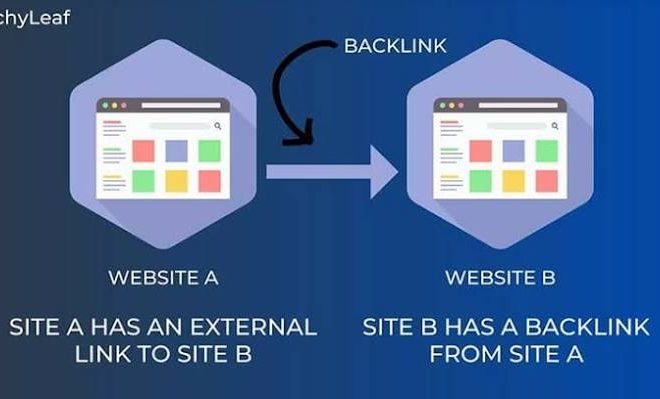
A niche edit is a link inserted into an existing post, not a new guest post or a freshly published placement. The appeal is simple: the page may already be indexed, may already have links pointing to it, and may already carry topical relevance around the anchor text you want. That can make the link feel stronger than a brand-new page with no history.
The term is used loosely, which is part of the problem. Some sellers mean a true editorial insertion into a real, published post. Others mean a paid placement hidden inside a post that was clearly built to sell links. Those are not the same thing, even if the invoice calls both “niche edits.”
I would separate the two by asking three questions:
- Is the page genuinely about the topic, or just adjacent enough to sell the link?
- Was the link added because it helps readers, or because a broker paid for the slot?
- Does the post already have real organic visibility, or is it a hollow page with a clean URL and little else?
If a seller cannot answer those cleanly, I would treat the offer as a link scheme risk, and I would suggest getting a professional SEO opinion before you buy. That matters because Google’s guidance on link spam is explicit about paid or manipulated links intended to pass ranking signals. You can read the policy language on Google Search Essentials and the broader link advice in Google’s link best practices.
Are niche edits worth it for SEO?
Yes, niche edits can be worth it for SEO when the page is real, the site is relevant, and the placement looks like something an editor might plausibly include. That is the narrow case where the link can pass relevance in a way that is hard to replicate with a new post.
The strongest argument for niche edits is efficiency. An existing post may already have internal links, age, and topical context. If the post is about 2,000 words on a related subject and your link sits inside a paragraph that genuinely needs a source or example, the placement can feel natural. That is very different from a paragraph stuffed with four exact-match anchors on a page about an unrelated industry.
The weakness is that many niche edits are sold as if they were editorial endorsements when they are really rental placements. That creates two problems. First, the value can vanish when the host page changes, gets no traffic, or is later noindexed. Second, the link profile can look unnatural if too many placements come from the same type of seller, the same anchor pattern, or the same network of sites.
For example, Semrush’s 2024 State of Content Marketing report found that 69% of marketers say link building is one of the hardest SEO tasks, which helps explain why buyers reach for faster placements. The caution is that speed does not remove risk; it only changes where the risk sits. Who should consider them? A site owner who already has decent content, wants selective authority signals, and can vet placements manually. Who should skip them? Anyone expecting niche edits to rescue a thin site, a brand-new domain, or a page with weak intent match. A niche edit is usually a multiplier, not a foundation.
My rule is blunt: if the target page would still make sense without the link, the placement has a chance of being worth it. If the link feels like the whole reason the sentence exists, I would pass.
How do niche edits compare with guest posts?
Niche edits usually win on speed and context; guest posts usually win on transparency and control. That is the real trade.
A guest post gives you a new post under your chosen topic, with your chosen structure and your chosen brand angle. You can shape the anchor, the surrounding copy, and the topical cluster more predictably. The downside is that a new post starts from zero and often needs time to earn trust.
A niche edit lands inside a post that may already have history. That can be useful if the post is indexed, the site has real topical authority, and the surrounding article is strong. But you give up control. You inherit someone else’s post quality, editorial judgment, and maintenance habits.
| Criteria | Niche Edits | Guest Posts | Winner for this condition |
|---|---|---|---|
| Speed of placement | Usually faster on an existing page | Slower because a new post must be written and published | Niche edits when speed matters |
| Topical fit | Can be strong if the host page already covers the subject | Can be built from scratch around your topic | Guest posts when you need exact topic control |
| Editorial control | Low | Moderate to high | Guest posts |
| Chance of looking natural | Good only when the insertion reads like a real citation | Good when the post is genuinely useful | Guest posts for cleaner ownership |
| Risk of seller churn | Higher on brokered existing pages | Lower if you place through a stable publisher | Guest posts |
| Need for aged URLs | Strong advantage | Weak advantage | Niche edits |
| Anchor flexibility | Often constrained by the host page | More flexible | Guest posts |
| Best use case | Selective authority on a relevant, indexed page | Brand building and topical coverage | Depends on the goal |
My view is that guest posts are safer for most brands, while niche edits are sharper tools for operators who know how to audit placement quality. The common mistake is treating niche edits as the default buy, and it is worth getting professional advice if the placement plan is unclear. They are not. They are the higher-risk option when control matters.
What should I check before buying a niche edit?
You should check the page, the site, the anchor, and the broker’s disclosure before you spend a cent. That sounds basic, but most bad purchases happen because someone skips one of those four checks.
Start with the page itself. Does it have a meaningful title, a real topic, and enough copy to stand on its own? A 500-word post with four outbound links is not the same thing as a substantial post with a clear editorial purpose. If the page looks like a link container, it probably is one.
Then check the site. A site can look polished and still be weak. If every post serves a different unrelated keyword cluster, the site may be a content shell rather than a publication. You do not need a magic metric to notice that pattern; you need basic skepticism.
Then check anchor text. Exact-match anchors are not automatically bad, but they become a problem when the profile is repetitive. A healthier link often uses branded, partial-match, or sentence-level context rather than stuffing the target phrase into the anchor itself.
Finally, ask how the link is being added. If the seller cannot explain whether the edit is permanent, who controls the page, and whether the placement is disclosed or labeled, I would walk away. If the answer sounds like a sales script rather than an editorial process, that is usually the answer.
A niche edit worth buying should survive a simple test: if a human editor reviewed the page later, would the link still look defensible? If not, the short-term gain is likely to come with long-term fragility.
When are niche edits a bad idea?
Niche edits are a bad idea when you need a durable strategy, not a one-off boost. They are also a bad idea when the offer depends on secrecy, mass placement, or vague claims about “authority.”
I would avoid them in four situations.
First, if your site is brand new and has no topical depth yet. In that case, links can help, but your money is usually better spent on content that deserves links before buying placements into other people’s posts.
Second, if the seller cannot show the actual post before purchase. That is a red flag because the exact context is the whole product. A link in a relevant post is not the same asset as a link on a random URL.
Third, if the site looks like part of a private network. When the same layout, the same content style, and the same outbound behavior repeat across many domains, the risk profile rises fast.
Fourth, if the target page on your own site is weak. Sending a niche edit to a thin page is like installing a bigger exhaust on a car with a bad engine. The part may be real; the result is still poor.
There is also a compliance issue. Search engines have long warned against manipulative link building. I would not treat that as a reason to panic, but I would treat it as a reason to keep your profile natural, varied, and defensible. If your link-building plan only works while nobody looks closely, it is the wrong plan.
What’s the verdict: niche edits or not?
Choose niche edits if you already have strong on-site content, you want a selective link from a relevant indexed page, and you can inspect the placement before buying. Choose guest posts if you need more control, clearer ownership, or broader content support around a topic. Neither if you are hoping backlinks alone will fix thin pages, a weak brand, or a site that cannot earn trust on its own.
My plain verdict: niche edits are worth it as a tactical tool, not as a main strategy. That means they can be valuable in a mature SEO program, but they are a poor starting point for most buyers.
Exception scenarios where the answer changes
Niche edits can become the better choice in a few specific cases.
If the host site is highly relevant and the page already ranks or attracts links, a niche edit may outperform a brand-new guest post because the placement sits inside an established URL.
If you are updating a broken mention or replacing a dead citation, a niche edit can be cleaner than asking for a fresh guest post. In that case, the link is filling a real gap.
If your industry is narrow and there are only a few credible publications willing to publish guest posts, existing-page placements may be the only practical option. That is a real constraint, not a theoretical one.
If the seller offers clear page-level control, reasonable topical fit, and a visible record of how the placement is maintained, the risk drops. I still would not call it low risk, but it moves from “avoid” to “consider.”
The flip side is just as important: if the placement is cheap, vague, and promised in volume, I would assume the quality is low until proven otherwise. In link building, the easiest deal is often the one most likely to cost you later.
Quick answers to common questions
Are niche edits white-hat?
Not automatically. A true editorial insertion can be defensible; a paid, hidden, or manipulated placement is not the same thing.
Do niche edits still work in 2026?
They can, if the page is relevant and the site has real value. The tactic has not disappeared, but low-quality placements are easier to ignore.
What anchor text is safest?
Branded or natural sentence-level anchors are usually the least risky. Exact-match anchors need restraint.
Should I buy niche edits from brokers?
Only if you can see the exact URL, judge the page quality yourself, and accept the risk that the placement may not stay valuable forever.
Can niche edits replace content marketing?
No. They can support content, not replace it. Without strong pages on your own site, the link has little to lift.
Drafted with AI; not yet reviewed by a person.