How to Build Backlinks with Digital PR
Last updated: October 11, 2026
Key Takeaways
- Digital PR wins backlinks when the story matches the publication, not when the list is longer.
- Narrow one idea to one reader, one beat, and one proof point before you pitch it.
- Your backlink strategy changes if you lack data, brand recognition, or time.
- Without data, borrow relevance from trends, public datasets, or expert commentary.
Quick Answer: How to Build Backlinks with Digital PR usually starts with one sharp story, one relevant publication, and one credible proof point; a focused campaign can take about 2–6 weeks.
Backlinks from real publications are possible, but not automatic—and not always fast. How to Build Backlinks with Digital PR usually means shaping a story, matching it to a specific audience, packaging evidence cleanly, and sending it to journalists who already cover that beat. When it works, the links come from pages that matter. When it does not, you get ignored emails and a few flimsy mentions on sites that barely move the needle.
What Actually Determines Whether Digital PR Earns Links
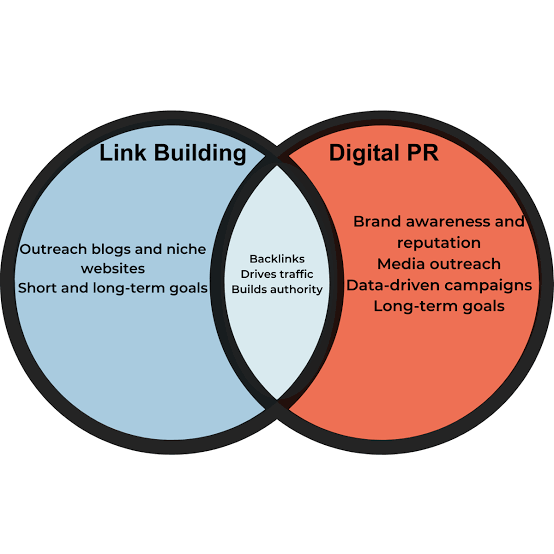
Digital PR earns backlinks when the story fits the publication, not when the outreach list is long. Weak angles die. Strong ones travel farther with less effort.
The common mistake is treating digital PR like link outreach with prettier graphics; if you are unsure how this applies in a regulated niche, consult a professional and review guidance from the FTC on endorsements and disclosures: https://www.ftc.gov/business-guidance/advertising-marketing/endorsements-influencers. Journalists do not want “link building.” They want something their readers will care about today, in under 30 seconds. So the idea has to pass three tests: timely, easy to grasp, and worth publishing now rather than next week. Otherwise, it is just noise in a crowded inbox.
I would choose digital PR when you need links from editorial sites such as newspapers, trade publications, magazines, and niche blogs that actually have standards. I would not choose it if your site has no story worth telling yet, or if your only goal is a quick volume of links at the lowest possible cost. A single campaign can take 2–6 weeks from idea to coverage. Fair warning: that pace is normal, not generous.
| Situation | Best Path | Why Other Options Fail |
|—|—|—|—|
| Brand has original data or a survey | Turn it into a newsroom-style story | Generic guest posts rarely earn links from strong sites |
| Brand has no data but strong expertise | Build a commentary pitch around a breaking trend | Product-led pitches sound like ads and get ignored |
| Brand is new and unknown | Use a sharp niche angle tied to a local or trade beat | Broad national outreach usually has no hook |
| Brand needs fast links | Use existing assets and relevant expert quotes | Waiting for a “big” campaign can stall momentum |
Quick check: can your pitch explain why a journalist would care in one sentence? If not, the story is the problem.
How do I turn one idea into a pitch journalists will open?
You turn one idea into a pitch journalists will open by narrowing it to a specific beat, a specific reader, and one concrete proof point. If the idea needs a long explanation, it is too wide. If it needs a 20-slide deck, it is too heavy. Simple test, ugly truth.
Start with one of four story types: original data, expert commentary, a practical trend report, or a visual asset such as a map, ranking, or calculator. Original data is often a strong option, but it can also be expensive and slow if you do it badly. A small survey can work if the questions are tight and the results are surprising enough to quote, though sample quality still matters. A ranking based on public data can work even better if the methodology is transparent.
Here is the path I would use:
- Pick one audience and one beat, such as “retail trade reporters” or “consumer finance editors.”
- Write the angle in one sentence. If the sentence has “and” three times, cut it down.
- Choose the proof source: your own data, public datasets, customer records, or a survey.
- Decide the publication value: a chart, a quote, a list, a stat, or a local angle.
- Draft the headline as a newsroom headline, not a marketing headline.
- Build the evidence pack: methodology, sample size, dates collected, and any caveats.
- Write the pitch email in 100–150 words, then remove any sentence that sounds promotional.
If you use survey data, be clear about sample size and field dates. A panel of 300 people is not the same as a nationally representative sample, and journalists know the difference. Use public sources plainly when they fit; for example, the U.S. Census Bureau, the Office for National Statistics, or a relevant government dataset. For methodology guidance, the Pew Research Center explains why survey design, wording, and margins of error matter: https://www.pewresearch.org/. If you cannot stand behind the method, do not pitch the result as fact.
Quick check: remove your brand name. Does the story still work? Then you probably have a real pitch.
The 3 Conditions That Change Everything
The right backlink strategy changes when you do not have data, do not have a recognizable brand, or do not have time. Those three conditions decide whether you should pursue national coverage, niche coverage, or commentary-first pitching.
If you have original data and a credible brand, you can aim higher. That is when a story can earn links from larger publications, because the publisher gets both novelty and authority. But if you are unknown, the same pitch can fail because editors have no reason to trust the source quickly enough.
No data? Use commentary tied to news. For example, if Google rolls out a search update, a B2B SEO firm can comment on likely effects for publishers. If a consumer trend dominates headlines, a retailer can explain what it means in practice. That pitch usually lands better in trade media than in national outlets, and that is fine. One relevant link from a respected niche publication can beat five weak links from sites nobody reads.
When time is tight, skip the giant build. Use a 48-hour pitch cycle around existing news, statistics from public sources, or a small expert roundup with a strong angle. It will not win the biggest links, but it can create momentum. If you have 4–8 weeks, build a more durable asset. If you have 2 days, move smaller and tighter.
A useful benchmark: if your target publication already publishes listicles, data-driven stories, or quote-led explainers in your niche, you have a shot. If it only publishes breaking news and staff-written investigations, a soft branded pitch is a poor fit. Wrong room, wrong music.
Quick check: need links by Friday? Stop thinking flagship campaign. Think news peg.
How to Build Backlinks with Digital PR When You Have No Data
You build backlinks with digital PR without data by borrowing relevance from a trend, a public dataset, or a subject-matter expert who can say something useful fast. If you try to sell a feature story with no evidence, editors will move on.
The best no-data options are usually these:
- a commentary angle on a current event
- a comparison or explainer using public information
- a ranked list built from third-party sources
- an expert quote tied to a breaking topic
- a visual or interactive tool assembled from public data
A simple workflow looks like this:
- Scan 3–5 publications your target editors already read.
- Note the recurring themes: regulation, pricing, consumer behavior, hiring, AI, or seasonal trends.
- Find a current event or public dataset that matches one theme.
- Choose one expert voice inside the company who can answer in plain language.
- Draft 3 usable quotes, each under 40 words.
- Attach one chart, one stat, or one concise example.
- Pitch only the beat that fits the story best, not every publication you can name.
This path is not for brands that want a dramatic headline on a huge outlet. Without original data, the hook is weaker, so the target list has to be more selective. It works best in trades, local press, and niche blogs with strong editorial standards. It also works well for service businesses that can speak to a live problem, like tax, housing, software, hiring, or cybersecurity.
One honest trade-off: commentary links are often easier to earn than data-led links, but they can be harder to scale. The story burns out fast, sometimes in 24–72 hours, so the pitch has to move quickly. Blink and it is gone.
Quick check: if your best asset is expert insight rather than numbers, pitch news reactions—not “campaigns.”
The outreach process that gets responses
The outreach process gets responses when the email is short, specific, and obviously meant for one editor, not 200 people. If the pitch reads like mass mail, the delete button wins.
I would use this sequence:
- Build a list of 20–50 highly relevant contacts, not 500 vague ones.
- Separate by beat, outlet type, and level of interest.
- Check recent bylines so the pitch matches what each person covers.
- Lead with the angle in the subject line, not your brand name.
- In the first sentence, say why it matters now.
- Put the key proof point in the first paragraph.
- Offer assets immediately: chart, methodology, source link, and a contact for follow-up.
- Follow up once after 2–4 business days, then stop unless there is a new angle.
A lot of generic advice says to personalize every email. I would refine that: personalize the fit, not the flattery. Editors can spot “I loved your recent article” when it is pasted into a batch email. Better to mention the topic they covered last week and then explain why your angle adds something new. Otherwise, it feels mailed-in.
Subject line examples that tend to be clearer than clever:
- “New data on remote job searches in healthcare”
- “Commentary on today’s FTC ad disclosure ruling”
- “Local ranking: where first-time buyers are most priced out”
Avoid attachments unless a publication asks for them. A linked press page or Google Drive folder is easier. Use plain text or lightly formatted email. If you send a press release, keep it short and put the most usable detail near the top.
Quick check: if your outreach list is bigger than your ability to research each contact, it is too broad.
Edge cases where the normal advice breaks down
Digital PR changes when the niche is small, the brand is regulated, the story is sensitive, the timeline is tight, or the publication mix is mostly low-quality sites. In those cases, the “big campaign” model can waste months.
- Situation: regulated industry → What changes: compliance review slows everything down. → Use this instead: build 2–3 pre-approved themes and use public data or commentary that legal can clear in advance. Finance, health, and legal brands should be especially careful and may need professional review before publishing claims.
- Situation: tiny local market → What changes: there may not be enough national news value. → Use this instead: target local outlets, regional business journals, and community publications with location-specific data.
- Situation: controversial topic → What changes: the story can attract attention for the wrong reason. → Use this instead: use neutral framing, clear methods, and a cautious spokesperson. Do not chase outrage if the brand cannot absorb backlash.
- Situation: no in-house data or analyst → What changes: you need borrowed authority. → Use this instead: use public datasets, interviews, or a narrowly scoped survey, even if it means a smaller story.
- Situation: low-budget startup → What changes: you cannot fund a large survey or design-heavy asset. → Use this instead: build one excellent commentary pitch per week around news and public data.
- Situation: the site already has weak links → What changes: a few good links may not be enough alone. → Use this instead: fix the obvious technical and on-page issues first so earned links can actually help rankings.
I would not use digital PR as a disguise for a thin product, a weak offer, or a site that still needs basic trust signals. Links can amplify quality. They rarely rescue the absence of it.
Quick check: if legal, compliance, or reputation risk is high, slow down and design the pitch around what you can safely defend.
What Most Articles Leave Out About Link Quality
Link quality matters more than link count, and the page that links to you matters more than the domain name on its own. If a publication’s article is buried, thin, or irrelevant, the link may be useful for referral traffic but weak for authority.
A decent digital PR campaign should try to win links that are:
- editorial, not sponsored
- contextually relevant to your topic
- placed in a real article, not a bio box
- on pages that themselves have some visibility or internal links
This is where a lot of generic advice goes wrong. It treats “backlink” as one thing. It is not. A link from a local newspaper article about housing prices is not the same as a mention on a scraped roundup site. A link from a trade publication with a strong archive can be valuable even if the domain is smaller than a giant general-news site.
If your goal is rankings, I would prioritize relevance first, then editorial control, then discoverability. If your goal is referral traffic or brand authority, you may care more about the outlet’s audience than raw SEO value. Those goals are not identical.
Keep an eye on placement too. A link buried in a footer or contributor bio is weaker than a link inside the story body. If the publication uses nofollow on some links, that is not automatically worthless, but it does change the SEO math. That is part of the trade-off, not a failure.
Quick check: if you are celebrating any mention without checking where the link sits, you are measuring the wrong thing.
FAQ
How many backlinks can one digital PR campaign get?
The answer depends on the quality of the story and the publication mix, but one strong campaign can earn a handful of high-value links or many more lower-value mentions. The number matters less than whether the links are editorial and relevant.
Do I need original data to do digital PR?
No, but original data usually gives you a stronger hook. If you do not have it, use expert commentary, public datasets, or a timely trend angle instead.
How long does digital PR take to work?
A campaign can take 2–6 weeks to produce coverage, and some stories move in just 24–72 hours if they are tightly tied to current news.
Drafted with AI; not yet reviewed by a person.